Troubleshooting Your Scrambled Eggs
Watery eggs come from syneresis – overcooked proteins squeezing out moisture. The fix is usually lower heat and pulling earlier while eggs still look wet; too much added liquid can also cause separation.
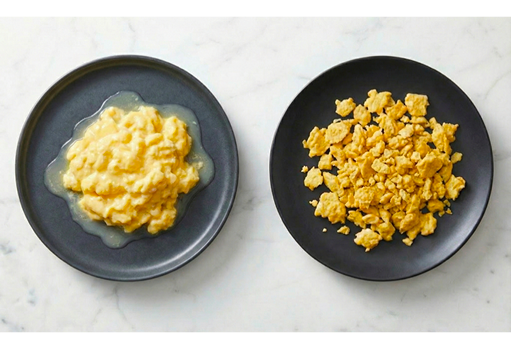
Watery eggs come from syneresis – overcooked proteins squeezing out moisture. The fix is usually lower heat and pulling earlier while eggs still look wet; too much added liquid can also cause separation.
Watery scrambled eggs are caused by syneresis—when proteins are overcooked and squeeze out their internal moisture. To fix this, lower your heat and remove the pan while the eggs still look wet. Adding too much liquid (more than 1/2 tablespoon per egg) can also cause separation.
FALSE.
You may have heard celebrity chefs say to salt at the end. Modern food science proves otherwise.

Placeholder Text/Paragraph

