Add-ins for the Ultimate Taste and Texture
Summary: Add-ins change texture, not just flavor: butter for glossy emulsion, cream for dense custard weight, water for fluffy lift. Milk is high in water and can lead to weeping during slow cooking.
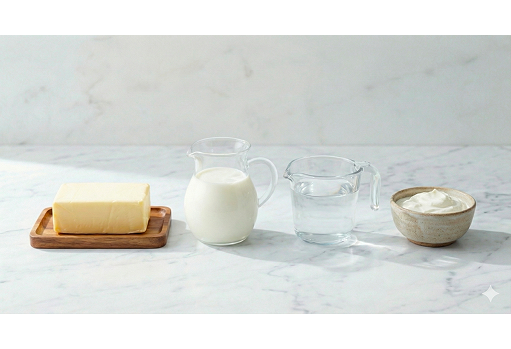
Summary: Add-ins change texture, not just flavor: butter for glossy emulsion, cream for dense custard weight, water for fluffy lift. Milk is high in water and can lead to weeping during slow cooking.
Scrambled egg add-ins change texture, not just flavor. Use butter for a glossy emulsion, heavy cream for a dense custard-like weight, and water for fluffy lift. Avoid adding milk if you want creamy eggs, as its high water content can lead to separation (weeping) during slow cooking.
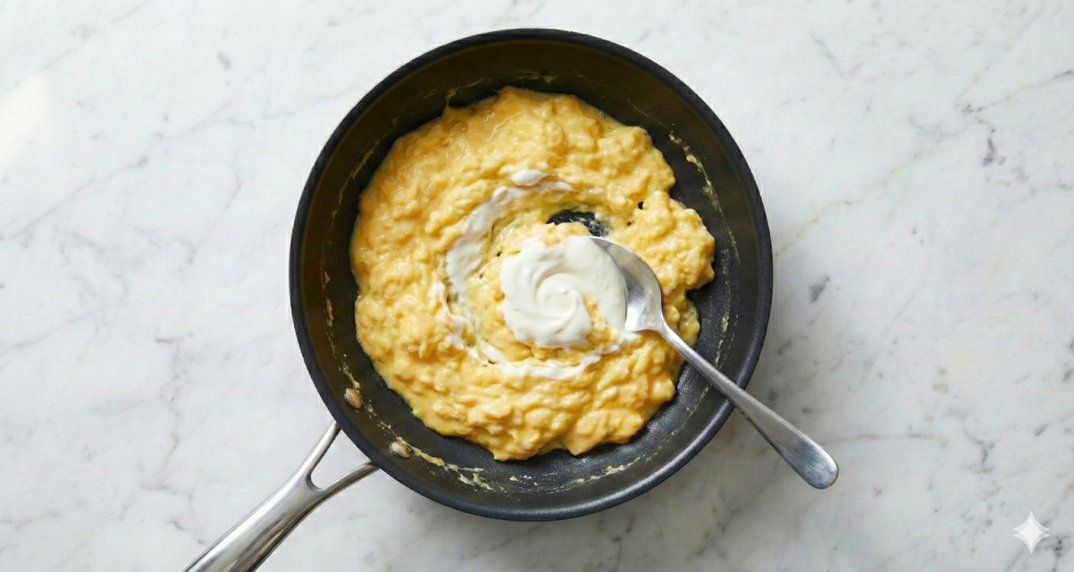
Eggs carry massive residual heat. Professional chefs use a "Thermal Brake" to stop the cooking instantly and add a final layer of luxury.
Placeholder Text/Paragraph

