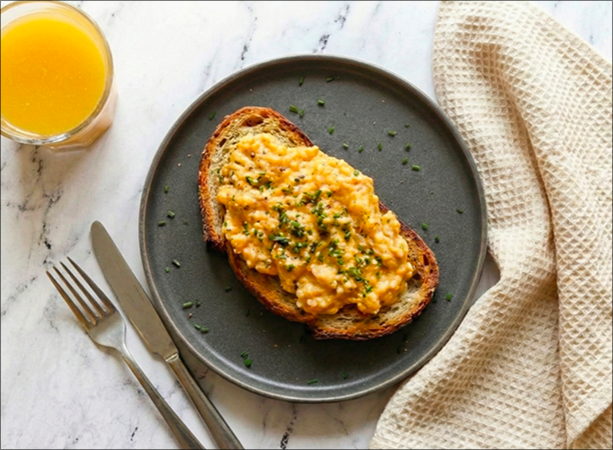
Ultimate Guide to Creamy Scrambled Eggs

Cook whisked eggs and cold butter over medium-low heat, stirring constantly to create a custard-like emulsion. Pull the pan when the eggs look glossy and slightly too wet – and let residual heat finish the set. 

Creamy snippet

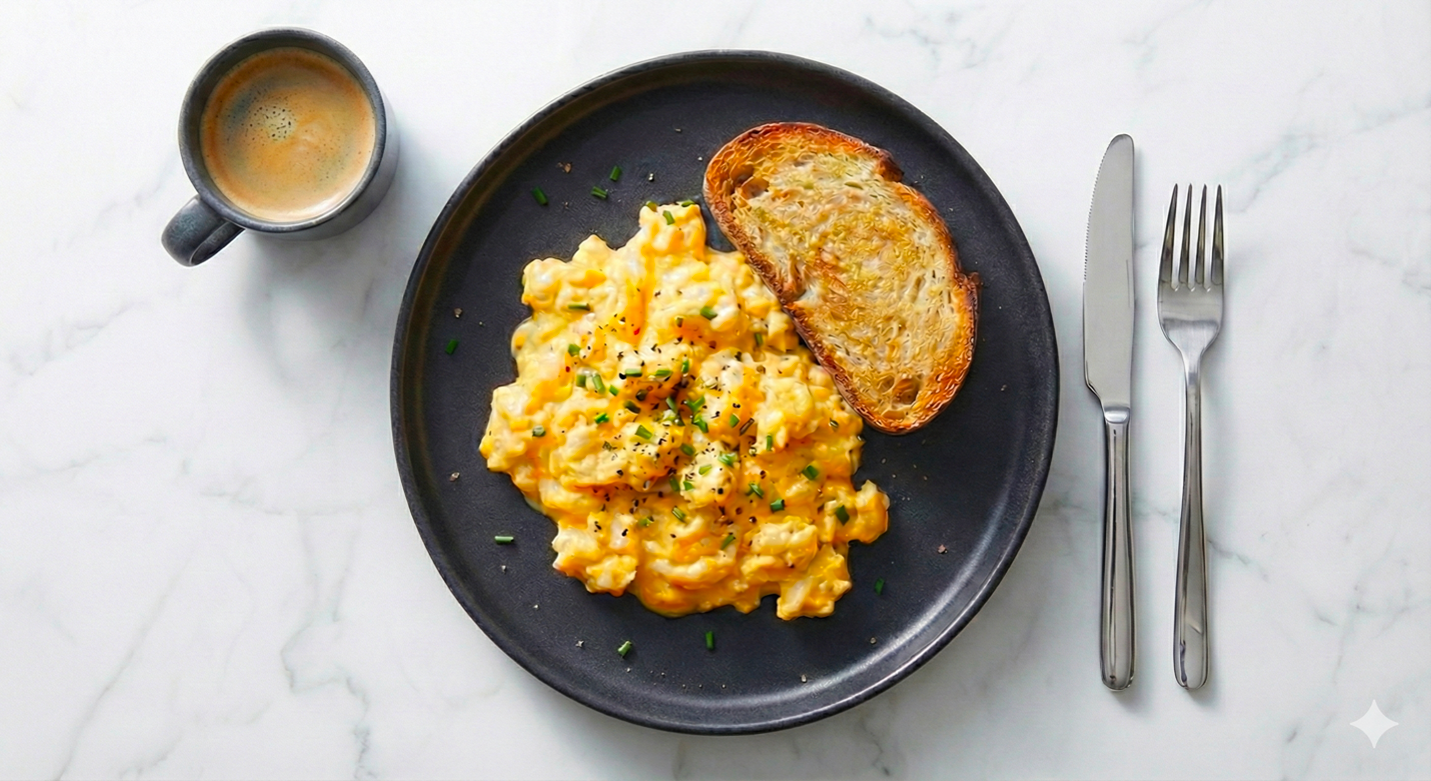
To make creamy scrambled eggs, just like traditional French scrambled eggs, use the "Low & Slow" method. Cook whisked eggs and cold butter over medium-low heat, stirring constantly to create a custard-like emulsion. The key is to remove the pan when the eggs look glossy and slightly too wet. Residual heat will finish setting them to a velvety consistency without drying them out.

The "Creamy" Rules
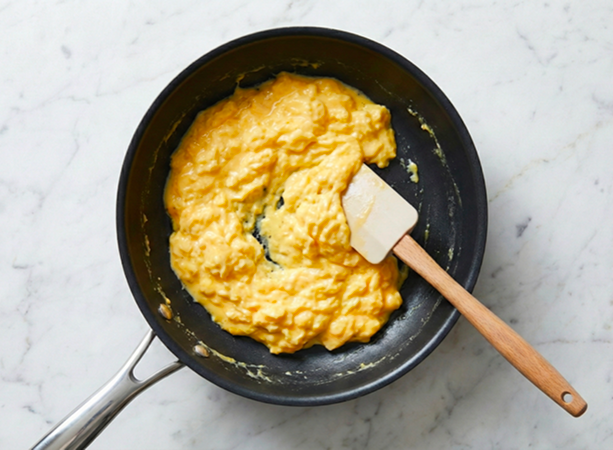
  • Texture: Soft, custard-like curds. Small ripples, not big chunks.
  • Secret: Low and Slow. Constant movement + Low Heat = Emulsion.
  • Add-Ins: Butter is best. If using milk/cream, limit to ½ tbsp per egg to prevent weeping.
  • Stop Point: When they look "wet and glossy." (If they look done in the pan, they are dry on the plate.)
Recipe Guide

Ingredients

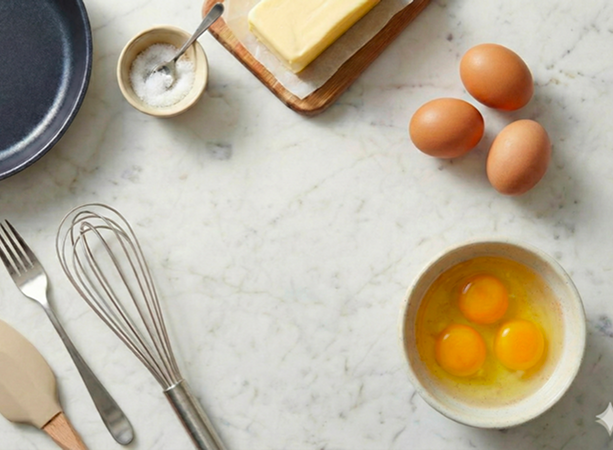
  • 3 Large Eggs (Free range if possible)
  • 1 tbsp Cold Butter (Unsalted)
  • Salt (Kosher or Sea Salt)
  • 1 tbsp Crème Fraîche (Optional)
  • Optional: Chives, Black Pepper

Equipment

  • Non-stick pan (8-inch is ideal)
  • Silicone spatula
  • Whisk or fork

Instructions

1

Whisk:

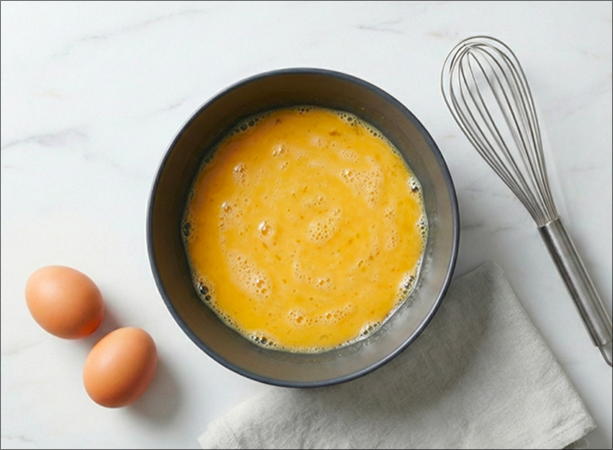
Whisk the eggs vigorously until the mixture is a single, uniform consistency.

Science Check:

Salt your eggs now. Pre-salting helps keep the eggs tender by buffering the proteins so they don't bond too tight.

2

Cold Start

Add butter and whisked eggs to a cold pan. Place pan over Medium-Low heat. 

3

Gentle Folding

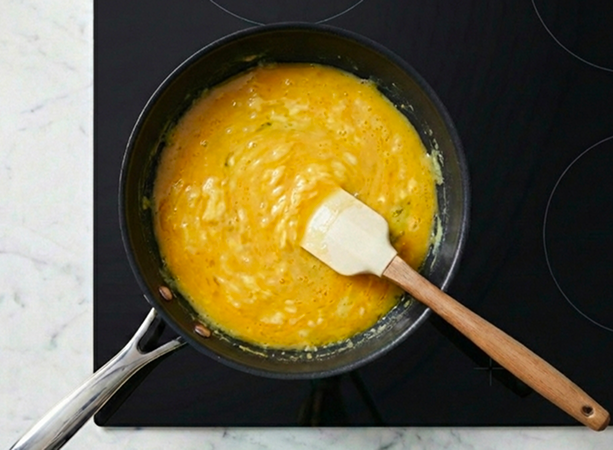
Begin folding continuously with a silicon spatula. Push from the edge to the center, sweeping the bottom. You are massaging the curds, not chopping them.

4

Stop Point

The eggs will gradually form small curds and the mixture will thicken to a custardy consistency. Watch for a “wet gloss” texture. Remove from the heat when they still look slightly runny as the residual heat will finish cooking the eggs in 30-60 seconds. 

Science Check:

Stir in 1 tablespoon of crème fraîche now. The cold dairy drops the temp below coagulation (stopping the cooking), while the acid adds a bright, velvety finish.

The Science: Why We Prefer Butter (But Milk is Okay)

Ingredient What it does The Risk The Verdict
Butter Emulsifies. Fat coats proteins for high gloss. Burnt Taste. Too hot = Butter burns altering the taste. Best for "Creamy"
Heavy Cream Softens. Raises coagulation temp for tenderness. Heavy / Soup. Too much = eggs don't set well. Use sparingly (1 tsp/egg).
Milk Dilutes. Adds water volume. Weeping. Too much = eggs can't hold the additional water content. Limit to ½ tbsp per egg.

Note on Safety

For children, pregnant women, or immune-compromised individuals, the FDA recommends cooking eggs until firm or reaching an internal temperature of 160°F (71°C).